
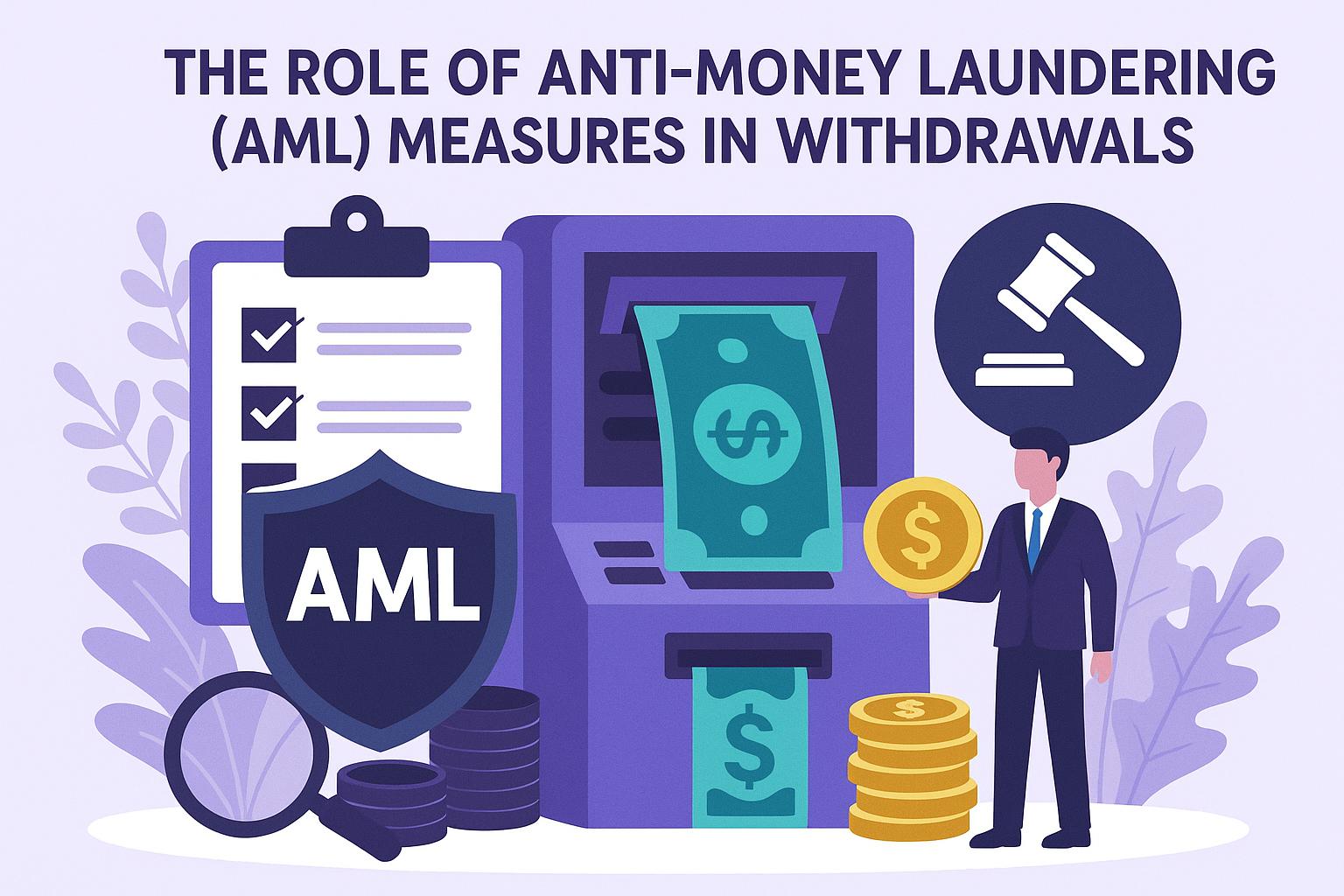
The Importance of Anti-Money Laundering (AML) Measures
Ensuring that financial transactions are legitimate is a cornerstone of the global financial system’s integrity. Anti-Money Laundering (AML) measures are crucial in monitoring and controlling financial activities, including withdrawals, to prevent the illicit flow of money through financial institutions. By embedding stringent controls and clear guidelines, financial entities can significantly reduce the risk of being exploited for money laundering purposes.
Understanding AML Measures
AML measures consist of laws, regulations, and procedures that aim to prevent criminals from legitimizing funds obtained through illegal means. These measures are not only regulatory requirements but also essential practices for safeguarding the financial system. Key AML components include customer due diligence, ongoing monitoring, record-keeping, and training for all personnel involved in financial services.
AML’s importance cannot be understated in today’s interconnected global economy, where transactions occur at an unprecedented pace. The complexity and speed of modern financial systems have provided fertile ground for illicit activities, making AML more relevant than ever. By adhering to robust AML protocols, financial institutions act as gatekeepers, ensuring that their networks are not misused for illegal activities.
The Role of AML in Withdrawal Processes
Withdrawals, like deposits and other financial activities, can be vulnerable to money laundering techniques. Therefore, banks and other financial institutions implement AML measures to scrutinize withdrawal requests and identify suspicious activities. By doing so, they ensure that withdrawals do not aid in the movement of illicit funds.
Customer Due Diligence (CDD) is particularly crucial in this regard. During CDD, institutions gather and verify information about the individual or entity making a withdrawal. Information such as the source of funds, the nature of the relationship with the bank, and transaction patterns are evaluated to ensure legitimacy. This comprehensive assessment helps in identifying red flags that might suggest money laundering activities.
Continuous Monitoring
AML measures also involve continuous monitoring of transactions. This dynamic process helps identify patterns or anomalies that may indicate suspicious activity. Financial institutions employ sophisticated software and algorithms to detect these patterns and raise alerts for manual investigation by compliance teams. These technologies allow for real-time scrutiny and prompt response to potential threats.
Continuous monitoring is not just about detecting anomalies, but also about understanding the context within which transactions occur. By analyzing behavioral patterns and transactions in depth, financial institutions can gain insights into customer habits and can more effectively detect deviations that could signal illicit activities.
Reporting Suspicious Activities
When suspicious activity is detected, financial institutions are required to report these activities to the appropriate authorities. Such reports include comprehensive details of the suspicious withdrawal and are integral to law enforcement’s efforts to combat financial crime. This reporting is a legal obligation and a critical part of the AML framework. Moreover, collaborating with law enforcement ensures a holistic approach to tackling money laundering activities.
Timely and accurate reporting not only aids in immediate investigations but also contributes to broader intelligence that can prevent large-scale money laundering operations. It aids in building a knowledge base that can be used to refine and enhance future AML measures.
Challenges and Enhancements
Despite the advancements in technology and regulatory frameworks, challenges remain in effectively implementing AML measures for withdrawals. Criminals constantly find new methods to circumvent existing controls, necessitating continuous improvement and adaptation of AML systems. Financial institutions must stay informed of evolving tactics and update their systems accordingly to safeguard against potential risks.
Technological advancements, particularly in machine learning and artificial intelligence, offer significant enhancements in the detection and prevention of money laundering activities in withdrawal processes. These technologies can improve the accuracy and efficiency of monitoring systems, helping institutions stay ahead of potential threats. Machine learning, for instance, enables systems to learn from historical data and improve anomaly detection over time.
Challenges also extend to the harmonization of international AML standards. As financial systems become more interconnected globally, disparities in local regulations can create vulnerabilities. Hence, international cooperation and standardization of AML practices are vital to combat money laundering effectively on a global scale.
Adapting to Evolving Threats
Financial criminals are adept at evolving their strategies to bypass traditional AML controls. This necessitates financial institutions to remain agile and continuously innovate their AML strategies. Instituting a culture of compliance within these institutions is critical, where staff from all departments understand the importance of AML and are equipped with the knowledge to act swiftly when they identify potential issues.
Investing in employee training and awareness programs is another enhancement that can fortify AML measures. Staff should be familiar with the latest trends in money laundering and be equipped to identify and escalate suspicious activities effectively.
Conclusion
AML measures are indispensable in the withdrawal process, aiming to protect the financial system from misuse. By implementing effective customer due diligence, continuous monitoring, and timely reporting of suspicious activities, financial institutions can play a pivotal role in the global fight against money laundering. As financial crimes evolve, ongoing vigilance and adaptation are essential to uphold the integrity of financial transactions.
The proactive implementation of AML protocols ensures that financial systems remain robust against ongoing threats. This, in turn, sustains the trust and confidence of the public in financial systems. Moving forward, enhanced collaboration between governments, regulatory bodies, and financial institutions will be key in creating a secure and resilient financial ecosystem.